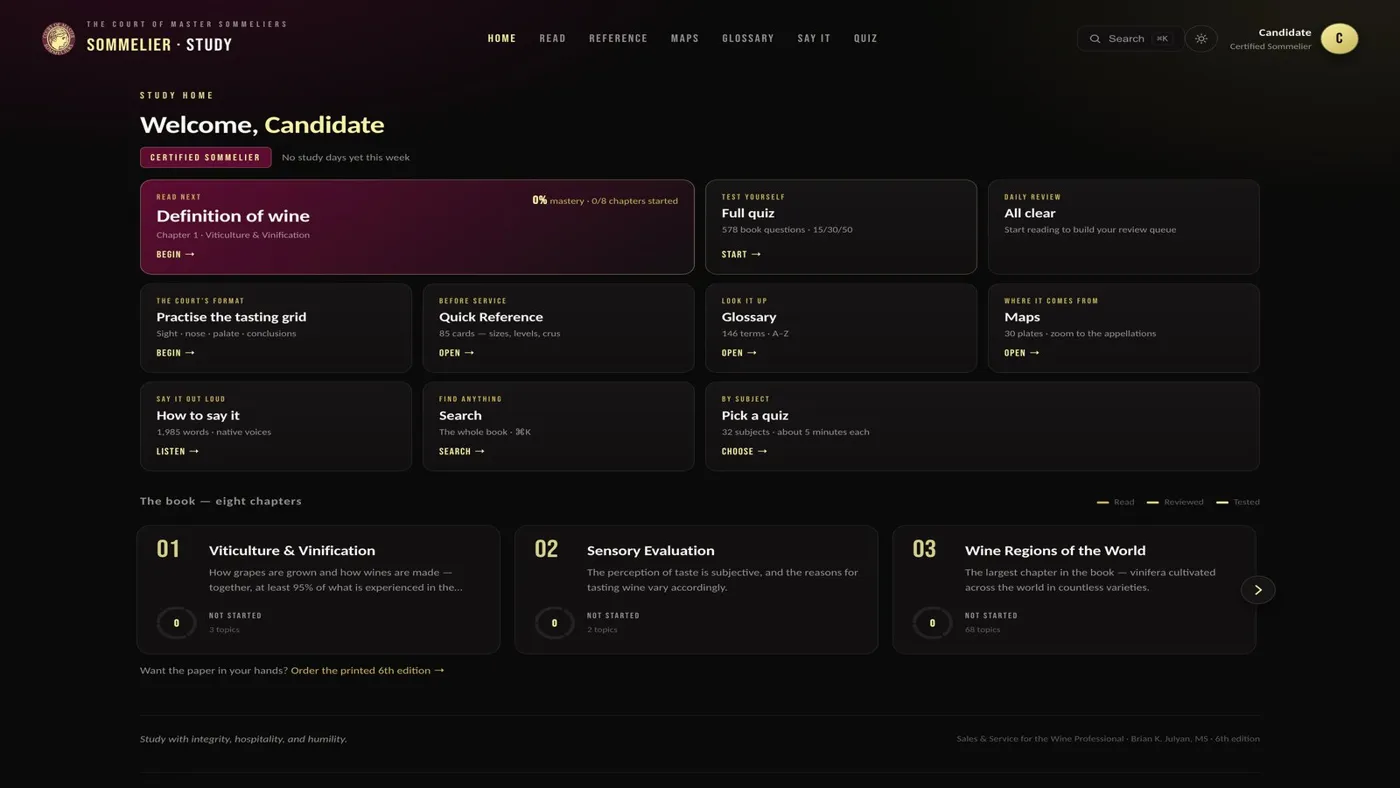

No screen can pour a wine. What the portal can do is make you think in the order the Court’s deductive tasting asks for: sight, then nose, then palate, then a conclusion.
The Blind Tasting Room turns that order into a short game. The tasting grid beside it lets you walk the whole format, step by step, in the book’s own words.
01How a glass is played
Each glass starts with the Sight clues only, such as clarity, brightness, intensity, colour and hue. Press to nose the glass and the Nose clues appear. Press again to taste it and the Palate clues follow. Once everything is showing, the page tells you it is time to conclude.
Every clue is a term taken word for word from the Court’s Deductive Tasting Format.
02The conclusion
The call board, listing every wine in the room by grape and origin, opens only after the palate. Until then the page asks you to read the whole glass first. The aim is to understand the wine, not to have it right at first glance.
Use the wait. At each stage, note what the clues tell you and what they rule out, the way the deductive format builds a picture before it names anything. When the call board opens, you should already have a reason for your choice, not just a hunch. At the reveal, read the book’s sentences against your notes: where your reasoning held, and where a clue pointed somewhere else.
There are no points. You have one call per glass, as exactly one conclusion ends a deductive tasting, and each glass is saved to your record as practice.